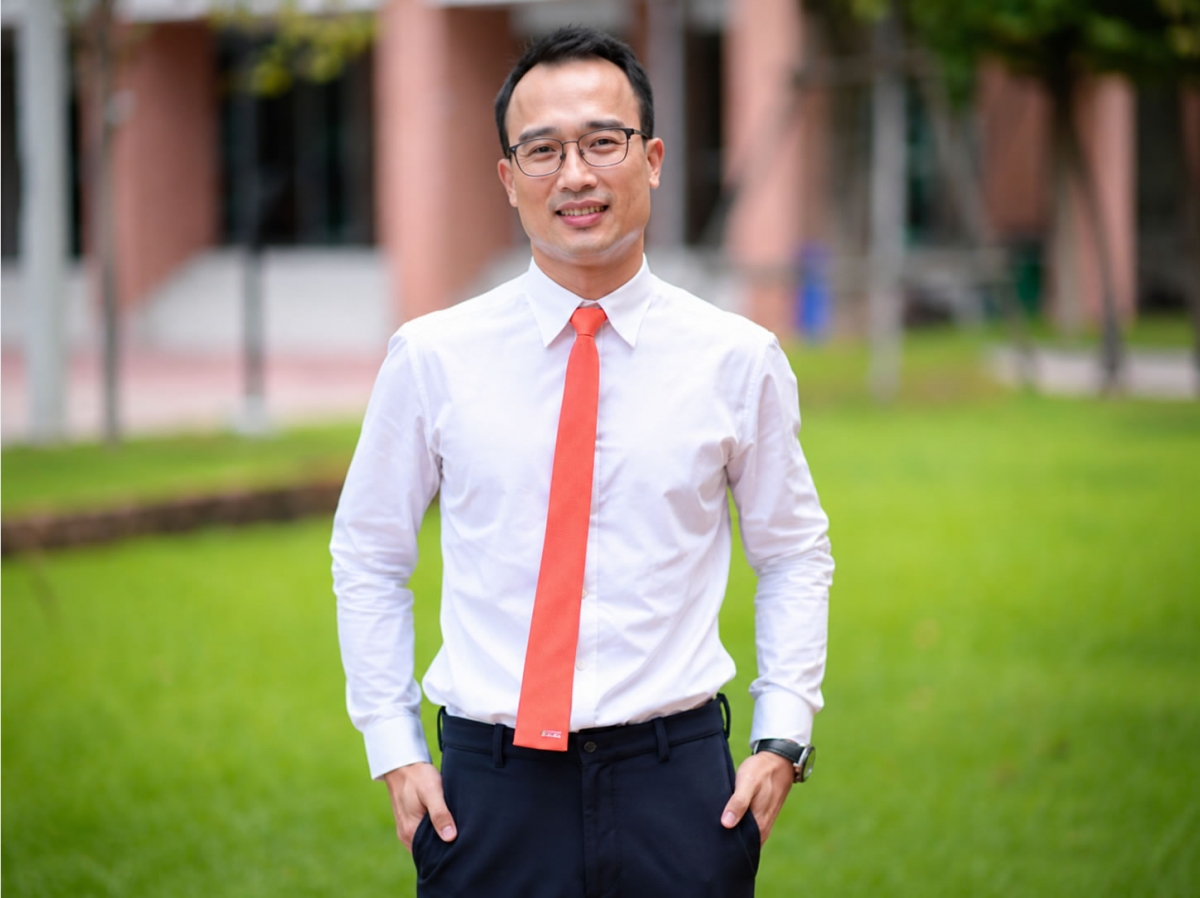
Prof. Dr. Chanon Warisarn
Title: Challenges and Perspectives on Artificial Intelligence Neural Networks-based Detection for Magnetic Recording
Abstract
With the tremendous increase in the demand for larger storage capacity, hard disk drives (HDDs) remain a primary technology for storing data. Perpendicular magnetic recording (PMR) has been employed for the past two decades and has supported areal densities (ADs) of up to approximately 1.0 Terabits per square inch (Tbits/in²). However, to meet rapidly increasing storage demands driven by advances in communication technologies and data-intensive applications, and to overcome the superparamagnetic limitation of conventional PMR, HDD technologies must evolve toward substantially higher AD operation.
Nowadays, artificial intelligence such as deep neural networks and deep learning have proven to be very effective in addressing key challenges in magnetic recording systems. In various studies of alternative high-density recording methods such as HAMR, MAMR, BPMR, two-dimensional magnetic recording (TDMR), and multilayer magnetic recording (MLMR), they have been widely utilized to significantly enhance the BER performance of recording systems.
In this talk, the challenges and perspectives on artificial intelligence neural-network-based detection for magnetic recording will be discussed to inspire those who need to find new challenging technologies and solutions to scale to 10 Tbits/in² together with us.
Biography
Chanon Warisarn (Member, IEEE) received a B.Eng. degree (First-Class Honours) in Electronics Engineering Technology (ENET) from the King Mongkut's University of Technology North Bangkok (KMUTNB), Thailand, in 2006, and a Ph.D. degree in Electrical Engineering from the King Mongkut's Institute of Technology Ladkrabang (KMITL), Bangkok, Thailand, in 2011. He is currently a Professor with the School of Integrated Innovative Technology (SIITec), KMITL. His current research interests include communications and signal processing for data storage devices and systems.