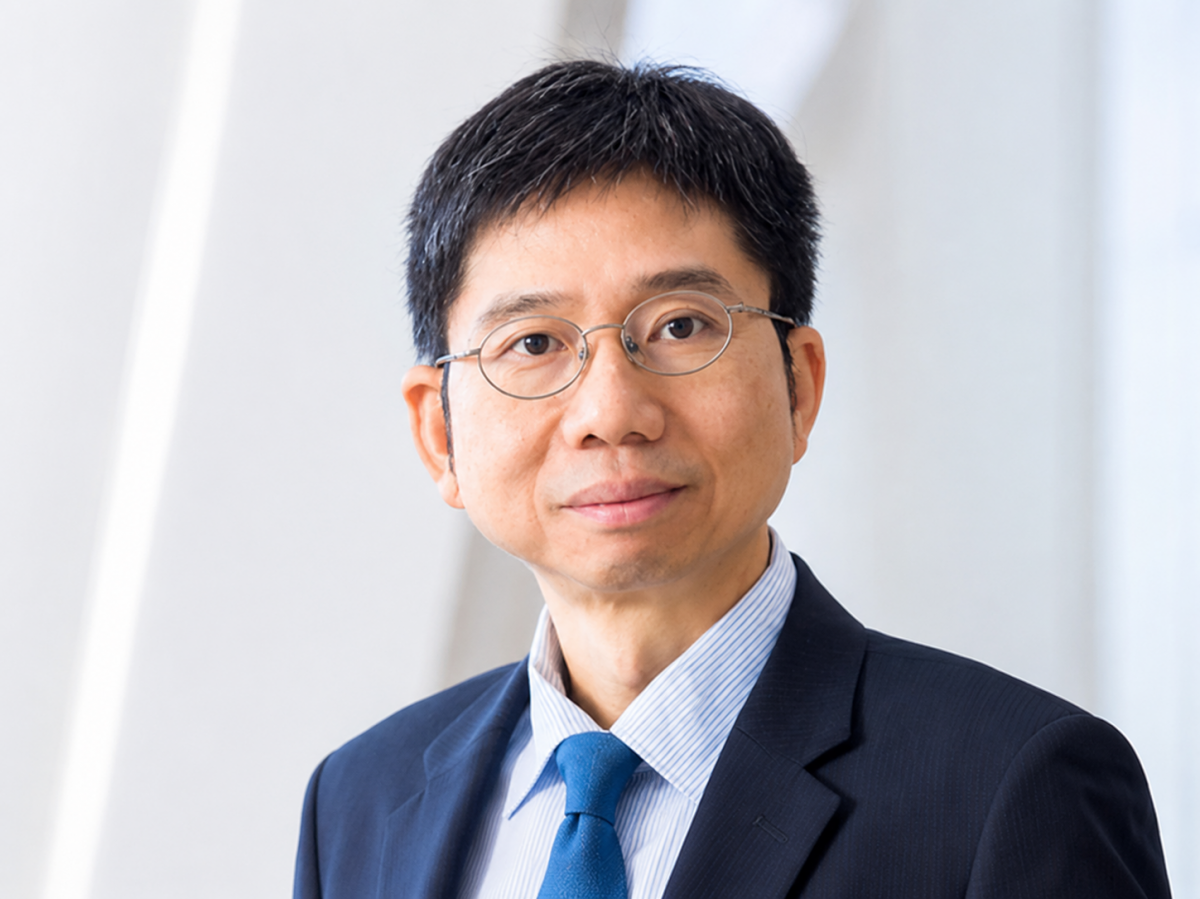
Prof. Kwok Wa Leung
Title: From Analytical Design to AI Assistance: New Possibilities for Dielectric Resonator Antennas
Abstract
Dielectric resonator antennas (DRAs) have attracted growing research interest in recent years, owing to their compact size, high radiation efficiency, and versatile excitation schemes. Traditionally, the dielectric waveguide model (DWM) has served as the primary analytical tool for DRA design. This keynote will first present our recent progress in developing closed-form analytical design formulas based on the DWM. These formulas enable engineers to directly determine DRA dimensions from specified dielectric constants and single or multiple operating frequencies, and they prove highly effective for wideband and multi-band designs.
However, analytical approaches are inherently limited to canonical DRA geometries. As we move toward the 5G/6G era, antenna design faces significant challenges, including complex geometries, multi-objective requirements, and prohibitive computational costs, which neither the DWM nor conventional numerical methods can adequately address. The second part of this talk will therefore shift focus to the growing role of artificial intelligence in electromagnetics, supporting complex DRA geometries, multi-objective requirements, and prohibitive computational costs. We will showcase our recent intelligent design methodologies, including PSO-assisted directional DRA designs, neural-network-based resonant-mode recognition, graph-neural-network-assisted antenna synthesis, and machine-learning-driven optimization. These approaches not only overcome the limitations of analytical models but also open new possibilities, both in capability and in design philosophy, for future antenna systems.
Together, this talk traces a journey from analytical design to AI assistance, revealing the progress made in DRA design over the last decade.
Biography
Kwok Wa Leung (梁國華) is a Chair Professor in the Department of Electrical Engineering at City University of Hong Kong (CityUHK). He received his B.Sc. (1990) in Electronics and Ph.D. (1993) in Electronic Engineering, both from The Chinese University of Hong Kong, and has held a Visiting Professorship in the Department of Electrical Engineering at The Pennsylvania State University, USA. His areas of specialty are antenna design, electromagnetic theory, and microwave engineering. He was elevated to Fellow of the IEEE in 2011 (on first nomination) and served as an IEEE Antennas and Propagation Society Distinguished Lecturer (2012–2014). He was Editor-in-Chief of the IEEE Transactions on Antennas and Propagation (2013–2016) — the first appointee from Asia since the journal’s founding in 1952 — and received the First Class Award (Natural Science) of the 2016 Ministry of Education Award for Science & Technology. He is listed among the world’s most-cited scientists in Stanford University’s 2025 ranking (top 0.19% in “Network & Telecommunications”), with a Google Scholar h-index of 66 and over 15,500 citations. He has authored two research books, eight book chapters, 254 international journal papers, and 141 conference papers, and is the leading inventor of 59 granted patents (41 US, 17 China, 1 HK). He has served as Director of the Information & Communication Technology Centre at CityU Shenzhen Research Institute (2019–present) and as Associate Dean (Research) at CityUHK (2021–2022).